
Using Permitted Development to Unlock Rural Sites
( 4-5 Min Read )
A two-stage case study in Class Q permitted development and full planning consent.
The Site
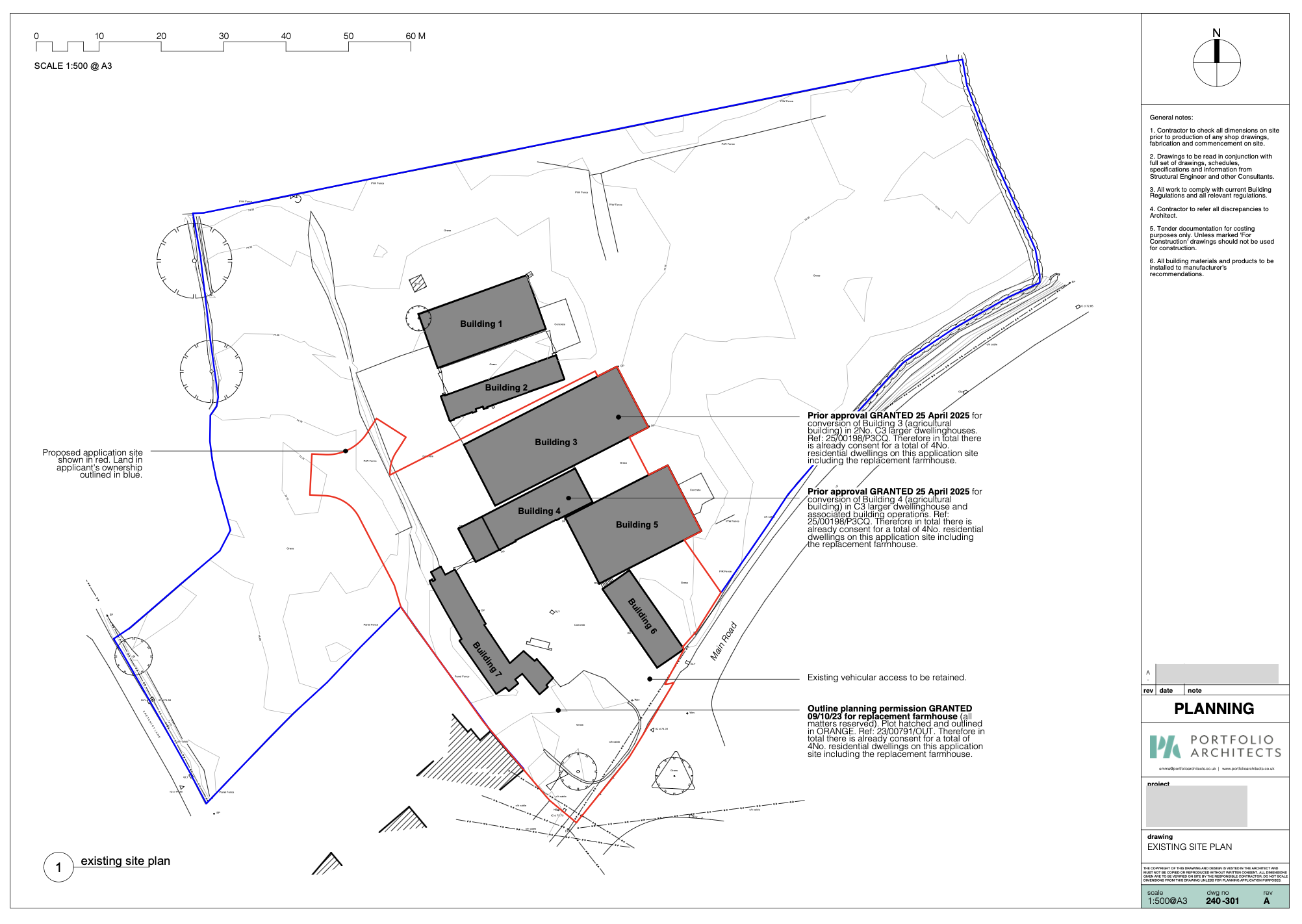
Tucked on the edge of a village in the Midlands countryside sat a cluster of redundant agricultural buildings — large, utilitarian steel-framed sheds that had long since fallen out of use and a couple of derelict brick built barns.
The land sat just outside the village settlement boundary, which under standard planning policy would make residential development extremely difficult to achieve.
Stage 1: Using Class Q to Establish Residential Use
The first question on any site like this is whether you can establish a principle of residential use without going through a full planning application. In this case, the answer was yes on some of the buildings — through Class Q of the Town and Country Planning (General Permitted Development) (England) Order 2015.
What is Class Q?
Class Q is a permitted development right that allows agricultural buildings to be converted to residential use (Use Class C3) without the need for full planning permission, subject to specific criteria and a prior approval process with the local planning authority.
Key criteria and limitations include:
The building must have been part of an Established Agricultural Unit as of 24th July 2023
A maximum of 10 dwellings per agricultural unit, with a combined floorspace cap of 1,000 sq m and each individual dwelling capped at 150 sq m
The building must be structurally capable of conversion — it cannot be a rebuild
External dimensions can be increased by up to 200mm, and a single-storey rear extension of up to 4m is permitted onto an existing hard surface
The site must have existing suitable access to a public highway
Class Q does not apply in National Parks, Areas of Outstanding Natural Beauty, Conservation Areas, or to listed buildings.
*Please refer to Government guidance for full Class Q criteria and updates.
What We Did
We submitted a Class Q prior approval application across several of the agricultural sheds on the farm, arguing that the buildings met the structural and lawful use criteria and that the site was suitable for residential conversion.
The honest reality? The resulting scheme was not the most aesthetically pleasing. Large industrial-looking agricultural sheds — corrugated steel, utilitarian proportions — do not make beautiful homes when converted within the tight parameters that Class Q permits. The permitted development rights restrict how much you can alter the external appearance, which limits the design ambition considerably.
But that wasn't the point of Stage 1.
The point was to secure residential use on a site that sat outside the settlement boundary — where full planning permission for new residential development would have faced significant policy resistance. Once residential use is established through Class Q, the planning position of the site changes fundamentally.
Prior approval was granted. Residential use was secured.
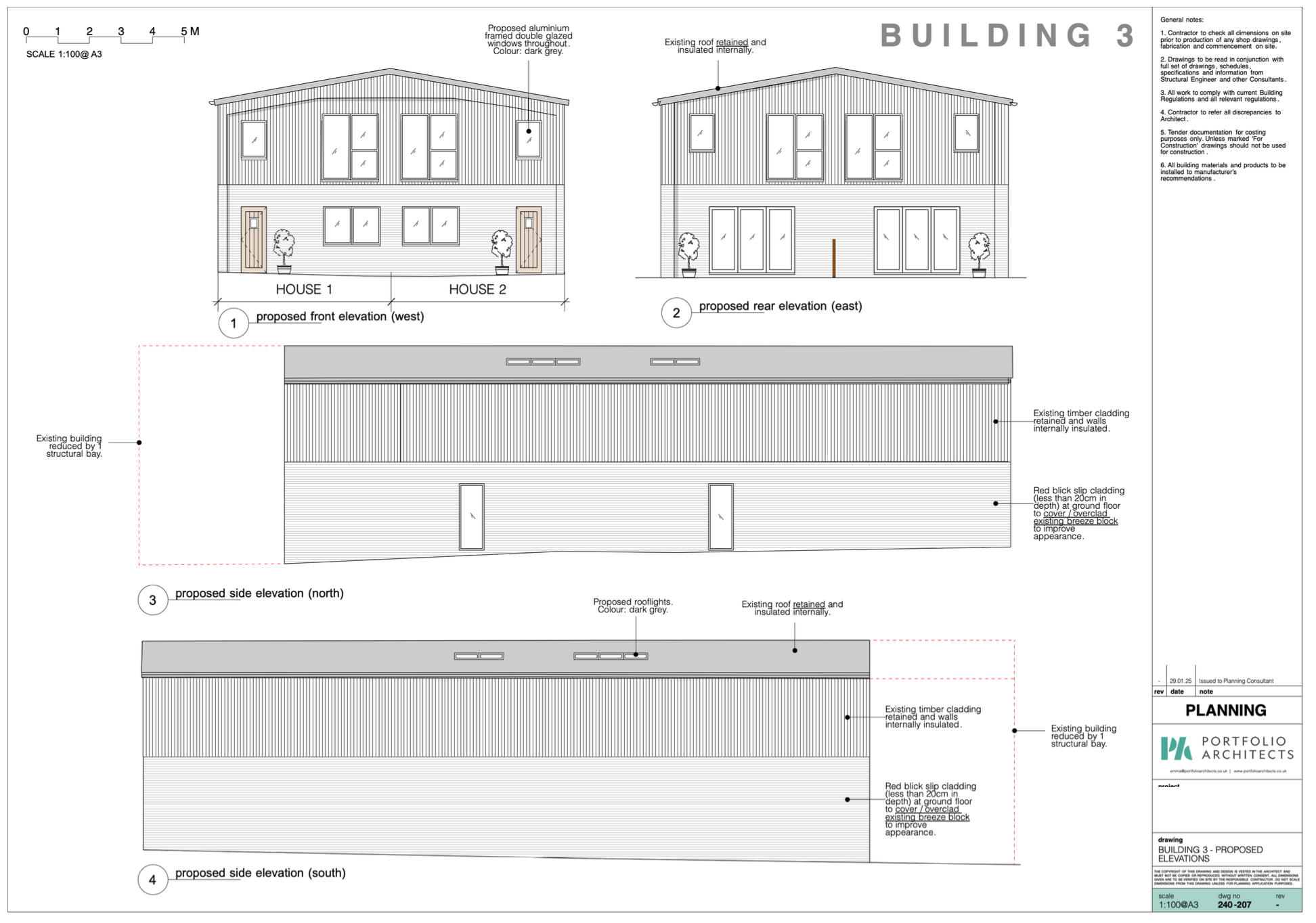
Class Q Submission - Proposed Elevations
Stage 2: Full Planning Application — Demolish & Redesign
With residential use established, we returned to the site with a very different brief for Stage 2.
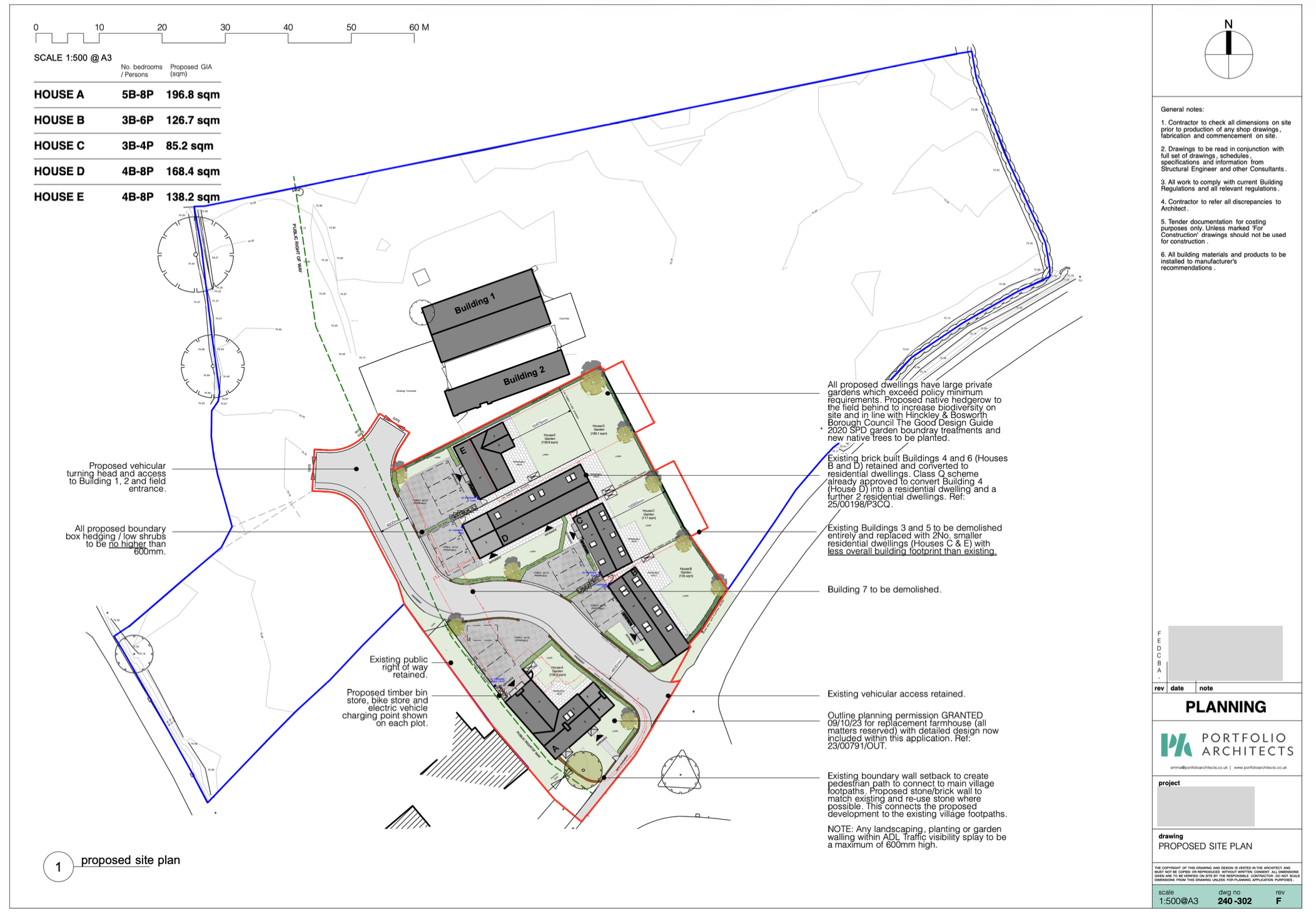
Rather than retaining the large, ugly sheds and working around their constraints, we made the case to demolish two of the most prominent structures and replace them with a design-led scheme — part barn conversion of the more characterful existing buildings, part new build — that would deliver high quality homes while responding properly to the rural context.
Why Does Establishing Prior Approval First Matter?
This is a critical point that is often misunderstood. Once a Class Q prior approval has been granted — even if it has not been implemented — it materially strengthens a subsequent full planning application on the same site.
The principle of residential use has been accepted by the LPA. The question for the full application shifts from should there be homes here at all to what is the best way to deliver them. That is a fundamentally different — and much more productive — planning conversation.
Under the National Planning Policy Framework (NPPF), local planning authorities are required to be supportive of the conversion of existing buildings and the sensitive redevelopment of brownfield and previously developed land in rural areas, particularly where it supports rural housing delivery. The sequential approach we took — Class Q first, full application second — gave us a strong platform to argue exactly that case.
The Design Approach
The full planning application proposed:
Demolition of the two largest, most visually dominant agricultural sheds — removing the industrial-scale structures that sat most awkwardly in the landscape.
Conversion of the 2 remaining, more characterful brick built barns — those with traditional agricultural forms, natural materials, and proportions more sympathetic to the rural setting.
A new build element designed to sit alongside the converted barns — informed by the agricultural vernacular of the area, using natural materials, considered massing, and a palette that references the working farm buildings of the local landscape rather than generic rural housing.
The design rationale was straightforward: the existing permitted development consent demonstrated that residential use was acceptable in principle. The full application demonstrated that demolishing the worst buildings and replacing them with a design-led scheme would deliver a significantly better planning and landscape outcome than the Class Q consent alone.
The Planning Outcome
Full planning permission was granted in May 2026. The result is a development that does what good rural housing should — it responds to its context, delivers genuinely well-designed homes, and leaves the site in a materially better condition than it was found.
Do You Have a Similar Site?
If you'd like to discuss your site and explore what might be achievable, we'd love to hear from you. Get in touch for a free initial conversation — no obligation, just a straightforward discussion about your land and its potential.